
The sales team says the lead came through word of mouth. Google Analytics says organic search. The customer, if you ask them, says they came across you somewhere, but they do not remember exactly where or when. The paradox is that they are probably all right in some way, but the CRM records only the final event.
In an industrial B2B sales cycle, the lead attribution problem is that the buying journey often begins months before the inquiry is submitted. B2B buyers spend nearly 70% of the research process independently, without directly interacting with the company (INFUSE/6sense, 2024). Anyone who measures only the last click sees the final meter of a much longer race, and risks cutting investment in the very channels that are driving performance.
Who Chooses the Supplier, and When
In industrial SMEs, the technical decision has often already been made by the time the inquiry arrives. The design engineer, who must ultimately take responsibility for the machine, is usually the first person to evaluate suppliers: downloading datasheets, comparing specifications, and reading application case studies. They do this weeks or months before ever opening a contact form.
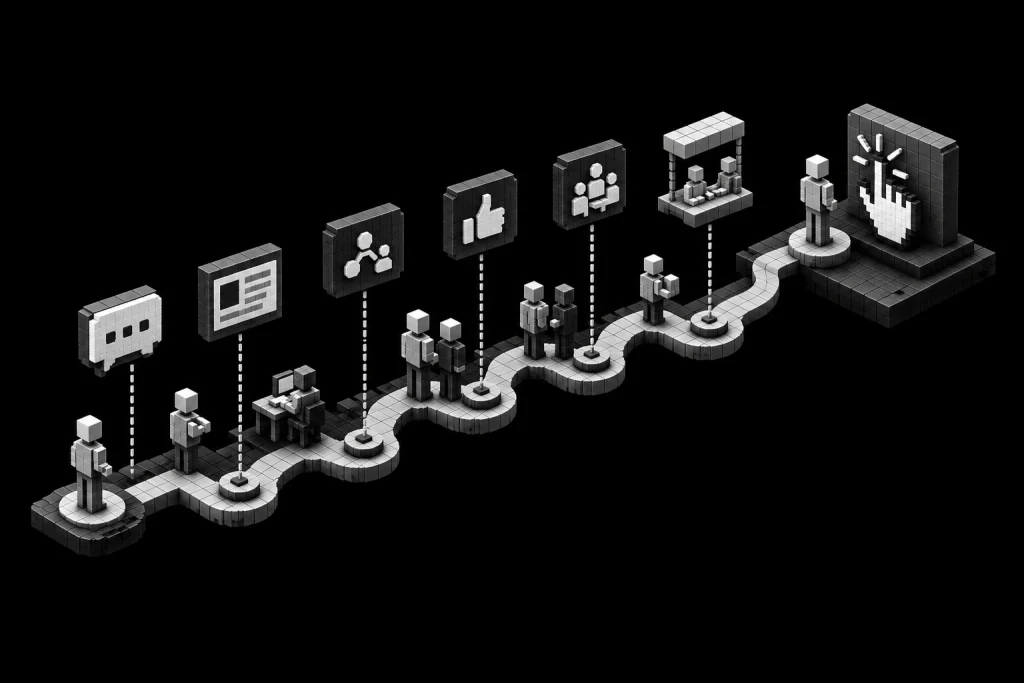
It is a long, fragmented journey that is almost always digital. The same person may visit a supplier’s website five times over three months, arriving each time through a different channel: first through a Google search, then through a LinkedIn post, later through a newsletter link, and finally by typing the brand name directly.
According to the State of Marketing to Engineers 2025 report by TREW Marketing and GlobalSpec, supplier websites and technical publications remain the primary sources of information during the selection process. Sixty-seven percent of engineers have little trust in AI-generated content when evaluating suppliers and prefer technical insights and independent sources. By the time the buyer enters the picture, often only to formalize the request, most of the supplier evaluation work has already been done.
Why Last-Click Attribution Is Misleading
In a sales cycle like this, assigning all credit to the final touchpoint is like judging a marathon by looking only at the last kilometer. The final click plays a role, but it is probably the one that tells us the least. It is often a branded search, a direct email, or a bookmarked link. In other words, it is the moment when someone has already decided to contact you.
Everything that led to that action disappears from the reports. The three previous visits, the article they read, the LinkedIn post, the trade show they attended six months earlier: none of it is recorded as the “lead source.”
In manufacturing, the buying process typically involves between six and ten people, including design engineers, production managers, quality managers, and buyers (INFUSE/Voice of the Buyer, 2025). Each conducts research through different channels and at different times. The final click is simply the moment when one of those people decides to step forward. It tells you nothing about how they got there.
In Italy, the situation is made even more complex by the fact that many interactions between technical professionals and suppliers take place through email, phone calls, or word of mouth, without being tracked by digital tools. This is confirmed by the Digital B2B Observatory report from the Politecnico di Milano (2025), which highlights the significant digitalization gap that still exists among Italian manufacturing SMEs in supplier information flows.
The Channel That “Doesn’t Generate Leads” Is the One That Gets You on the List
When reports suggest that SEO, blogs, or LinkedIn “do not generate leads,” the temptation is to cut the budget allocated to those channels. It seems like a rational decision, but it is based on distorted data: those channels may not generate the final click, but they are often responsible for the first one.
Only 5% of your market is actively looking for a supplier right now. The remaining 95% is forming preferences and deciding on its vendor list long before issuing an RFQ (LinkedIn B2B Institute / Ehrenberg-Bass Institute, 2025). In manufacturing, marketing operates primarily in the early stages of the funnel. The goal is to be included in the technical specifications before a tender document is even written.
Suppliers are often removed from the shortlist by “hidden” stakeholders during the validation phase, based on perceptions of credibility and brand familiarity built over time (LinkedIn B2B Institute / Bain, 2025). Configurators, datasheets, white papers, technical articles, and LinkedIn content are not activities that convert directly, but they are often what determines whether you make the shortlist when the customer is ready to choose.
How to Read the Data in a Useful Way
Perfect attribution does not exist, even with the most sophisticated tools. A 2025 study involving more than 60 B2B marketing managers makes this very clear: traditional attribution is broken, and even organizations with advanced tools use it as an imperfect compass, supplementing it with market feedback (RevSure AI, 2025). The realistic goal is not to measure every click. It is to reconstruct the buying journey and use that understanding to make informed marketing decisions.
- Ask. Add a question to your sales process: “How did you find us?” or “How did you first hear about us?” Record the answer consistently in your CRM. Low technology, high data reliability. Traditional tracking covers fewer and fewer touchpoints, so supplementing it with a direct question is one of the fastest ways to close the gap (B2B Marketing, 2025).
- Evaluate the journey, not just the entry point. How many visits did this contact make before reaching out? Which pages did they view? A lead who visited your website four times over three months did not appear out of nowhere, even if the CRM makes it look that way.
- Connect campaigns with sales stages. For every opportunity opened during the last quarter, record:
- First contact channel (based on a direct question to the prospect)
- Last contact channel (from Analytics)
- Known digital touchpoints After reviewing ten opportunities, patterns will already begin to emerge. Most B2B companies still combine last-touch attribution with qualitative insights (HubSpot, 2026). You do not need a complex marketing framework to get started. You need a method.
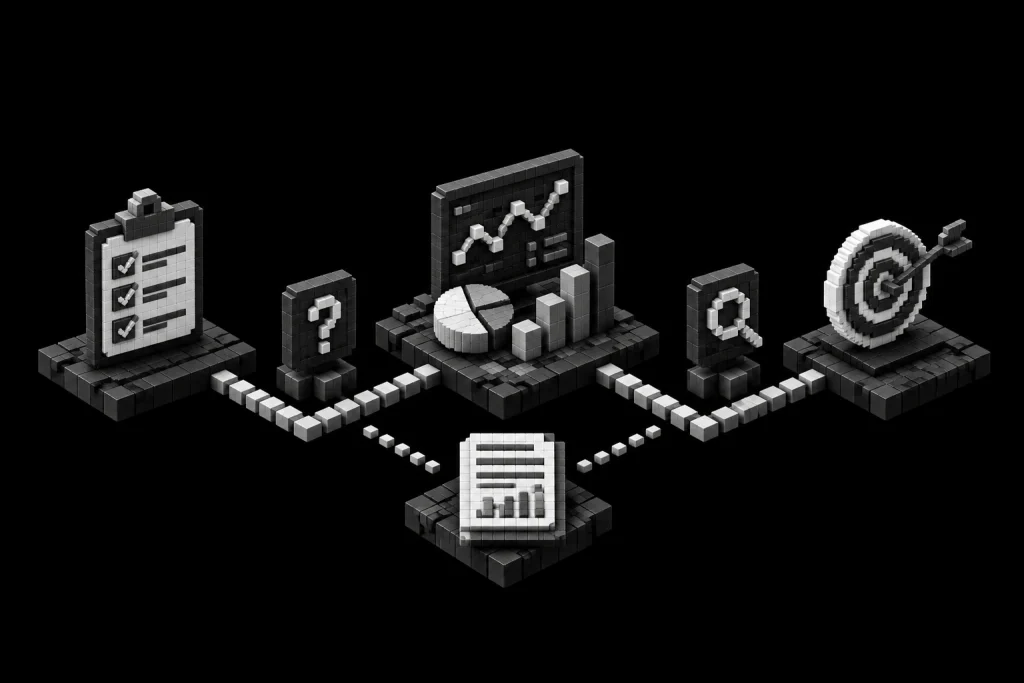
Every strategic decision starts with credible information, not necessarily the information that is easiest to access. In industrial B2B, the complexity of the sales process must be examined and understood, not oversimplified. A multichannel approach and a broader view of every touchpoint are the only way to truly understand what is generating opportunities.
If you want to understand how to build a digital presence that generates real business opportunities, start with an honest audit of what you are measuring and why.